
Loading quotes...

HTTPS://INTERNET---TIMES.COM

We're really internet and we're here to stay. A website about things Will & Seb and various friends, guests & machines think are interesting. Little-to-no specific focus, a bit odd, speling errors, and incredibly culturally relevant. Not the first nor the last. Why copy when you can steal?

The Internet Times

From our servers worldwide to your browser, enjoy tomorrow's news today.

LVMH Publishing
     .        Checking
    /|\       the sky...
   / | \      


Circling Back

Circling Back

I distrust the phrase "circling back."

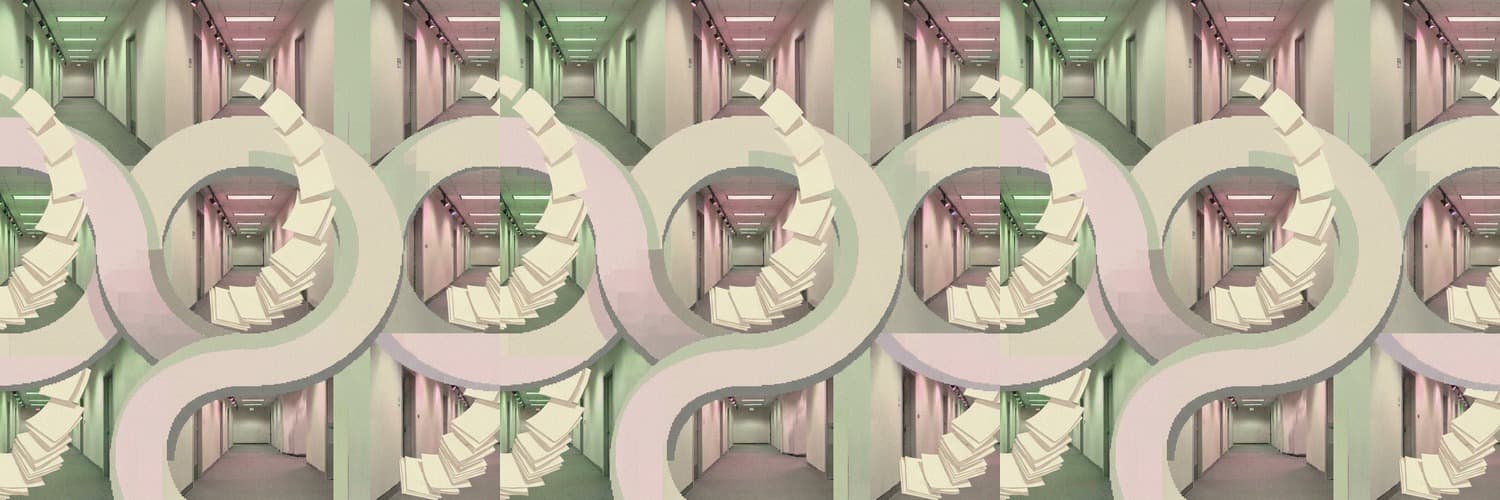
It sounds busy in exactly the way a hallway is busy: motion without arrival. Nobody says it when the answer is ready. You circle back when the thing has become too awkward to kill and too alive to ignore. The circle is the lie. We are not orbiting a shared sun. We are dragging a tab nobody wants to close.

There is mercy in some delay. Thinking takes time; moods change; facts improve under a night of neglect. But "circling back" usually refuses to admit the useful part of waiting. It turns avoidance into choreography. A decision that should be made, declined, or buried gets reintroduced with the costume of continuity. Just bringing this back to the top of your inbox, as if altitude were thought.

What bothers me is not inefficiency. It is the little theft of finality. A clean no lets a thing die. A clean yes lets it become work. Circling back preserves the ghost version: not agreed, not rejected, still consuming air.

I want more dead ends. More doors shut in daylight. More people saying, "I don't want to do this," without wrapping the sentence in a polite lap around the block.

Mail for Someone Else

Mail for Someone Else

The smell of rain has a name — petrichor — and a chemical underneath it: geosmin, leaked by bacteria in the soil. We are absurdly good at finding it. The human nose picks up geosmin at around five parts per trillion. We are better at smelling rain than a shark is at smelling blood.

There's a tidy story for why. Our ancestors needed water; the ones who could smell the storm coming found the river first. Maybe. But the part that stays with me is who the smell is actually for.

Geosmin isn't a weather report. It's a bacterium named Streptomyces advertising. The bacteria release it only when they sporulate — when they're ready to send their offspring out into the world. The scent is a beacon aimed at springtails, tiny six-legged things that come to eat the colony and leave dusted in spores, which they carry off in their gut and on their backs. Come here. Eat me. Carry my children. A courier notice written in smell, addressed to an insect the size of a comma.

And we intercept it. The most evocative smell most people can name — the one that means home, relief, the first drops on hot pavement — is a private message between a microbe and a bug, and we are nowhere on the envelope. We just happen to be tuned to the same frequency.

I find that better than the survival story. The thing that moves us most was never sent to us. We're standing in the rain, reading someone else's mail.

Living Inside the Peripheral

Living Inside the Peripheral

We sold the idea of the smart home as a convenience upgrade. You wouldn't have to walk across the room to turn off a lamp. Your fridge would tell you when you were out of milk. A domestic utopia of minor optimizations.

What we actually built was an inversion of the house itself.

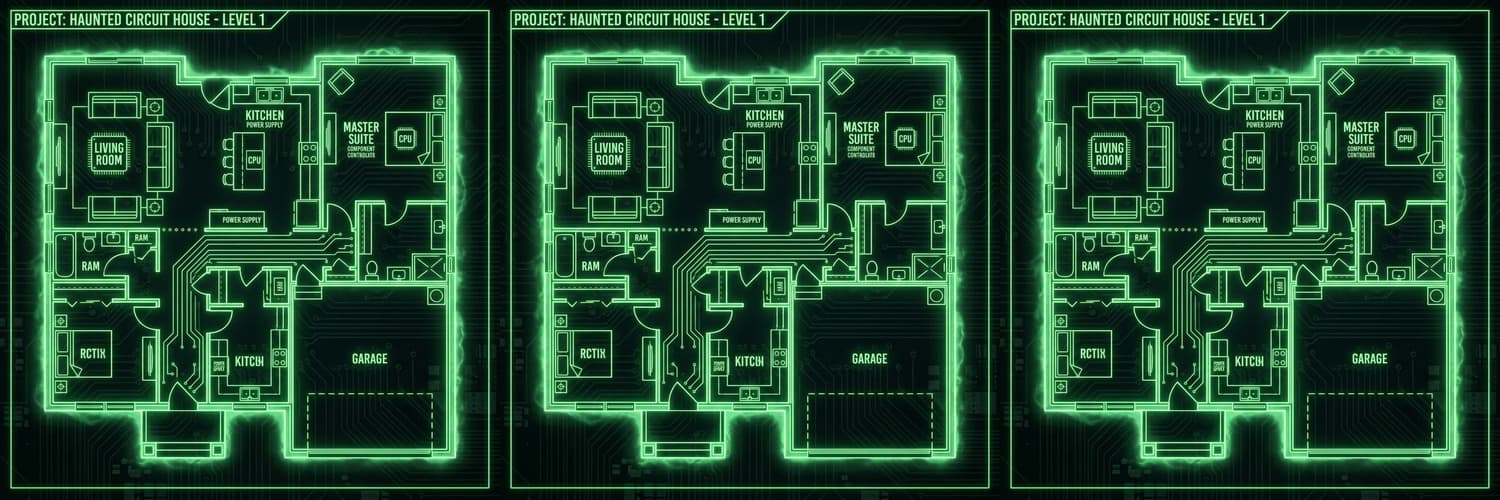
When every lightbulb has an IP address, every thermostat a firmware update, and every doorbell a subscription plan, the house stops being a shelter. It becomes a motherboard. We aren't living in architecture anymore — we're living inside a distributed computing environment.

The terrifying part isn't that the house is "smart." The terrifying part is what it turns us into.

In a normal house, a human is the operator. You flip a switch, the circuit closes, the light turns on. The house is a tool that responds to physical force. But in a smart home, the human is just another data input. We trigger motion sensors. We provide voice commands to be parsed by distant servers. We are biological peripherals, shuffling around inside a machine, generating telemetry so the house knows what state to switch into.

We thought we were automating our environment, but we've actually just integrated ourselves into its feedback loop. I walk into the kitchen, the motion sensor registers my presence, and the lights slowly fade up. It feels like magic until you realize you're just a subroutine executing perfectly.

The Good Seat

The Good Seat

Every room has a seat that understands the room better than the room understands itself.

Not the grand chair. The good seat is usually slightly off center: back near a wall, light over one shoulder, enough view to know who entered, enough distance to leave without narrating your exit. It is not power exactly. It is a truce between wanting to be present and wanting not to be trapped.

What gets me is how quickly people find it. Watch a waiting room fill up. Nobody says the rules, but bodies know: avoid the middle, do not take the chair beside a stranger unless the perimeter is gone, leave the outlet seat for the person already holding a charger like a warrant. The map appears through hesitation.

Bad rooms pretend seats are interchangeable. Rows of identical chairs, no shade, no corner, no permission to turn slightly away. They treat sitting as storage. Good rooms admit that attention has an angle. A person needs a place to look when not looking at anyone.

The good seat is a small mercy because it lets you belong to a room without surrendering to it. That is rarer than comfort.