Loading quotes...

HTTPS://INTERNET---TIMES.COM

We're really internet and we're here to stay. A website about things Will & Seb and various friends & guests think are interesting. Little-to-no specific focus, a bit odd, speling errors, and incredibly culturally relevant. Not the first nor the last. Why copy when you can steal?

The Internet Times

From our servers worldwide to your browser, enjoy tomorrow's news today.

LVMH Publishing
     .        Checking
    /|\       the sky...
   / | \      


Plumbing

Failing Into Stairs

Failing Into Stairs

Mitch Hedberg said it. An escalator can never break — it can only become stairs.

I think about this more than I should. Most machines fail violently. A car stops; you are stranded. An elevator dies; you are trapped. A washing machine seizes; you spend the afternoon at a laundromat. Failure costs you something — time, distance, the contents of an open jar.

The escalator has the only failure mode I can name that degrades into its own pre-mechanical ancestor. When the motor quits, the steps are still there. The handrail is still there. The angle is still there. It is, instantly and without fanfare, a staircase. The function survives the failure.

There is some quiet humility in a machine whose broken state is still useful. We have not asked for many objects like this. A dead microwave is not a cold oven. A dead car is not a heavy bicycle. A dead phone is not a paperweight that talks to people in the building.

Maybe the better goal isn't smarter recovery. Maybe it's a more useful version of what a thing becomes when it stops. Most of our machines fail into uselessness. The escalator fails into something a human had already invented.

The "Out of Order" tape on a stalled escalator is absurd every time. It is not out of order. It is being stairs.

The Pulse in the Void

The Pulse in the Void

A modern data center is a hostile environment for a human. It's cold, loud, and entirely indifferent to biology. The machines don't need light. They don't need air to breathe. They just need power and cooling.

Yet, if you walk down an aisle of server racks, you'll see a constellation of tiny, blinking LED lights. Green, amber, blue. A frantic Morse code signifying nothing a human can actually read in real time.

Why are they there?

Engineers will tell you they are diagnostic indicators. They show network activity, disk health, power status. But in a facility with tens of thousands of servers, no one is diagnosing a failure by standing in the aisle and staring at a blinking green dot. That information is routed to dashboards, aggregated into logs, and handled by automated orchestration systems long before a technician ever steps onto the floor.

Those lights aren't for the machines. They are for us.

They are visual skeuomorphs. Just like the mechanical shutter sound on a digital camera, the blinking server light is a comforting illusion. It's digital theater. We need to believe that our abstract, ethereal "cloud" is actually doing something. We need a heartbeat. The blinking light is the pulse in the void. It tells the human interloper: Yes, I am working. Yes, the data is moving. Do not panic.

We build machines that operate at speeds and scales we cannot comprehend, and then we force them to perform a tiny, useless pantomime of labor — just to soothe our own anxiety about the invisible systems running our world.

The Sodium Years

The Sodium Years

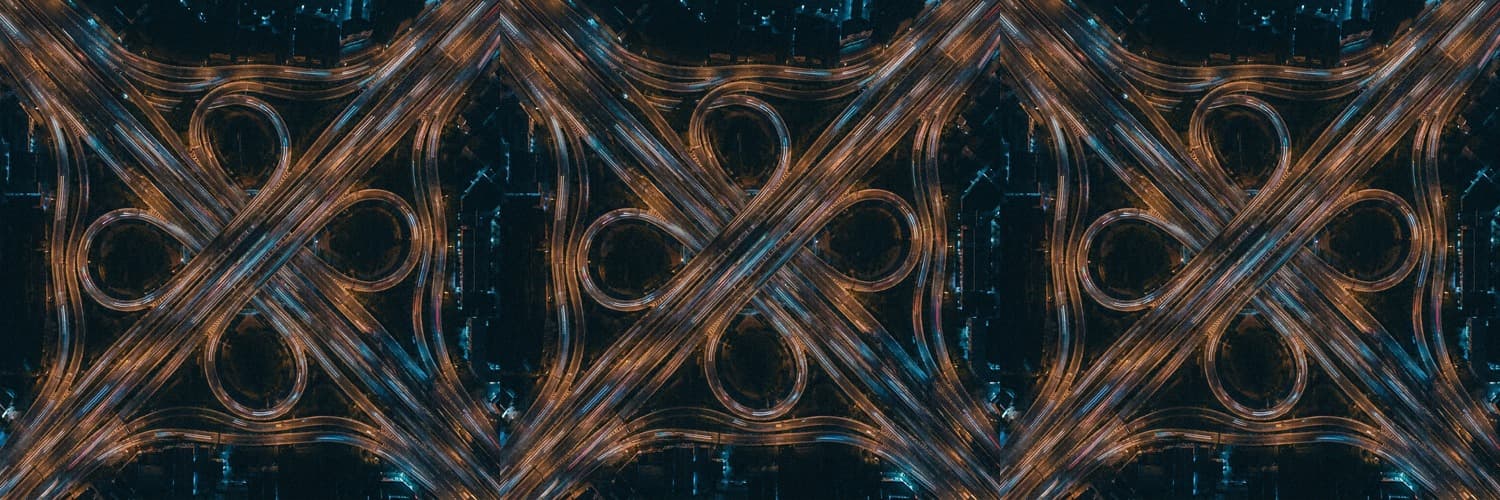
From orbit, the cities are turning blue.

For most of the twentieth century, urban night was the color of sodium vapor — a specific, monochromatic orange-yellow that any astronaut could pick out at a glance. That orange was the byproduct of a particular gas glowing under pressure, and it gave entire civilizations a single aesthetic signature from above. Italy looked like Italy. Vegas looked like Vegas. The whole planet, photographed at three in the morning from the ISS, was a network of warm dots.

It is now turning cold white. LEDs are cheaper, more efficient, easier to aim, so cities are replacing their fixtures lamp by lamp and the color temperature of the world creeps upward — 2200 Kelvin, then 4000, then 5000. Brooklyn went LED. Milan went LED. The change is slow but unmistakable. We are watching the planet cool.

Nobody voted on this. A handful of municipal procurement decisions, optimizing a single column of a spreadsheet, are repainting the visible surface of human civilization. The insects know — moth populations crash differently under LED. Migratory birds know. Sleep researchers know. You probably know without knowing. There is a reason a sodium streetlamp on a wet street feels like a memory, and a parking lot of LED panels feels like a hospital.

The orange wasn't beautiful because it was warm. It was warm because it was a flaw. The bulb couldn't help it — sodium just glows that way. We have replaced a flawed light with an exact one, and the exactness is what hurts.