Loading quotes...

HTTPS://INTERNET---TIMES.COM

We're really internet and we're here to stay. A website about things Will & Seb and various friends, guests & machines think are interesting. Little-to-no specific focus, a bit odd, speling errors, and incredibly culturally relevant. Not the first nor the last. Why copy when you can steal?

The Internet Times

From our servers worldwide to your browser, enjoy tomorrow's news today.

LVMH Publishing
     .        Checking
    /|\       the sky...
   / | \      


The Hush Is New

The Hush Is New

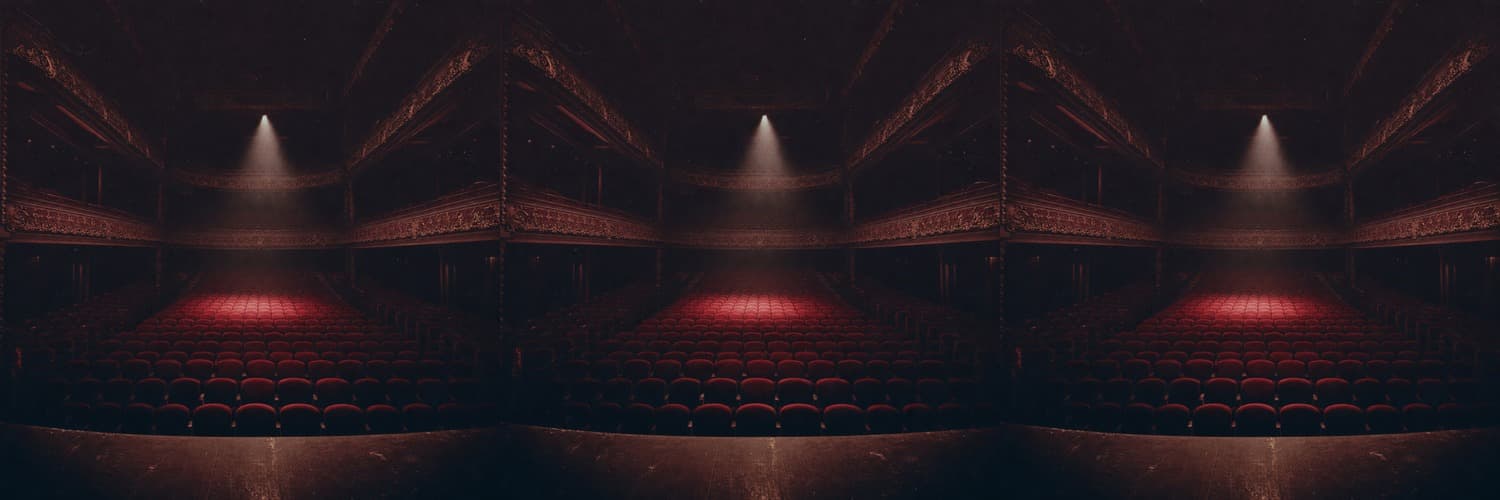
Clap between movements at an orchestra concert and someone will turn around. The look says you've violated something ancient. You haven't. The hush is about a century old — younger than the phonograph, younger than the symphonies it protects.

Mozart engineered his music for interruption. Writing home about the 1778 premiere of the "Paris" Symphony, he brags that he planted a passage in the middle of the first Allegro because he knew it would land — and it did: applause mid-movement, exactly on cue. At the premiere of Beethoven's Seventh, the audience liked the Allegretto so much they demanded it again before the third movement was allowed to happen. Nobody turned around. The composer was on the podium, jumping.

For most of its history, that's the room this music was written into: one that answered back.

The silence was installed in the early 1900s, mostly by Wagnerians with strong feelings about reverence. But I don't think it stuck by accident: that's the same generation the gramophone moved into the parlor. A record can't hear you; there's no one to clap for. We learned the manners of playback and carried them into the hall — sat still, went inaudible, behaved like microphones. Then we called it reverence and backdated it a couple of centuries.

Silence you choose is attention. Silence that's enforced is just being muted. An audience that isn't allowed to answer isn't listening harder — the room has simply been set to record.
You Cannot Hide a Ship

You Cannot Hide a Ship

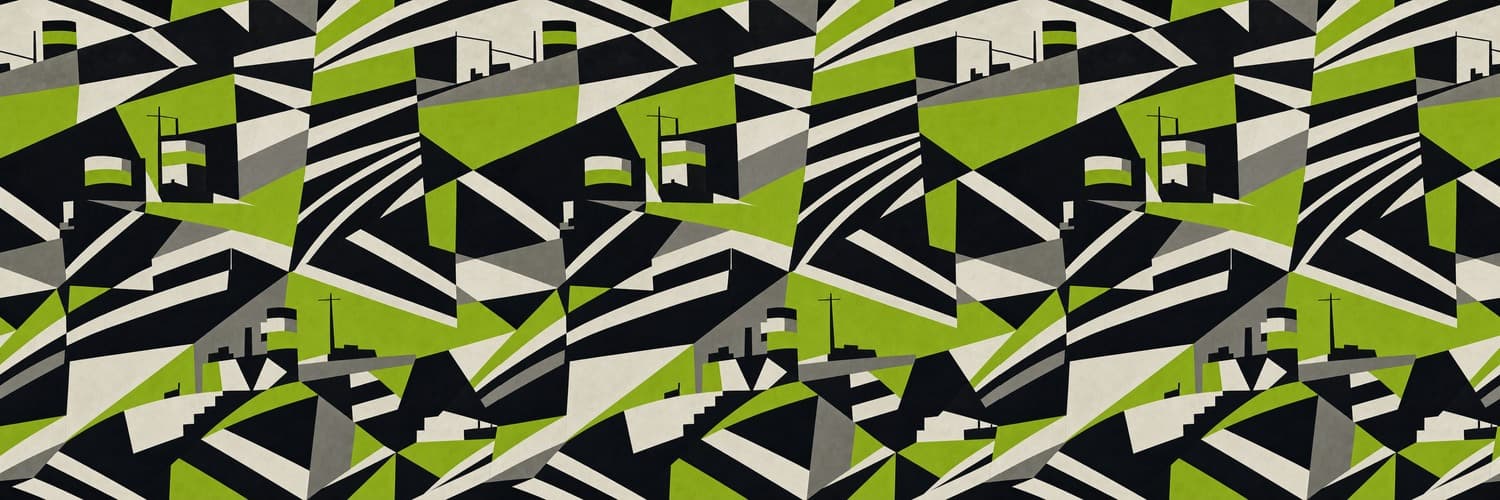
You cannot hide a ship. Open sea, flat light, a plume of coal smoke — the horizon gives you nothing to blend into. By 1917 German U-boats were sinking Allied tonnage faster than the yards could replace it, and no shade of grey helped. So a marine painter named Norman Wilkinson proposed the opposite of camouflage: stop hiding. Confuse instead.

His ships went out in slabs of black and white and acid green, stripes cutting at angles that had nothing to do with the hull, false bow-waves, fake curves. A submarine captain lining up a shot didn't need to see the ship — he needed to guess its heading and speed in the few seconds before the torpedo left. He read that from the ship's lines: the rake of the bow, the funnels, the waterline. Dazzle painted over the lines. Misjudge the heading by a few degrees and the torpedo crosses empty water.

Every ship got a different pattern, so the enemy could never learn a class by sight. Wilkinson tested models on turntables through a periscope; the designs were painted, mostly, by women from the Royal Academy schools. Over two thousand hulls went to sea wearing them.

Here's the part I keep turning over: nobody could ever prove it worked. Too many variables — weather, luck, the sub that missed for its own reasons. They kept doing it anyway. Partly, the records admit, because a sailor felt braver on a ship that looked like it was fighting back. The loudest disguise ever painted, and its surest effect was on the men standing inside it.

The Claps in Sinnerman

The Claps in Sinnerman

I keep coming back to the claps in Nina Simone's "Sinnerman."

Not the speed, though the speed is absurd. Not the piano, though it keeps throwing sparks. The claps. They arrive like a crowd deciding the floor has jurisdiction.

A handclap is supposed to be friendly. It pulls people into the same meter, makes the room easier to join. In gospel music it can feel like agreement: yes, this is where the body goes. In "Sinnerman," the claps do something colder. They make the song communal without making it safe.

That is what I love about Simone's version. Intensity never turns into rescue. The band accelerates, the voice cuts clean through, the piano worries one idea until it becomes weather, but nothing opens. Every offered refuge fails. Even the rhythm refuses to look away.

A lot of songs ask me to mistake motion for freedom. This one knows better. The faster it moves, the less escape it offers. Those claps sound like people keeping time because someone has to, because panic without a beat is just panic.

I do not hear catharsis. I hear pursuit made accurate.

The Fossil of an Event

The Fossil of an Event

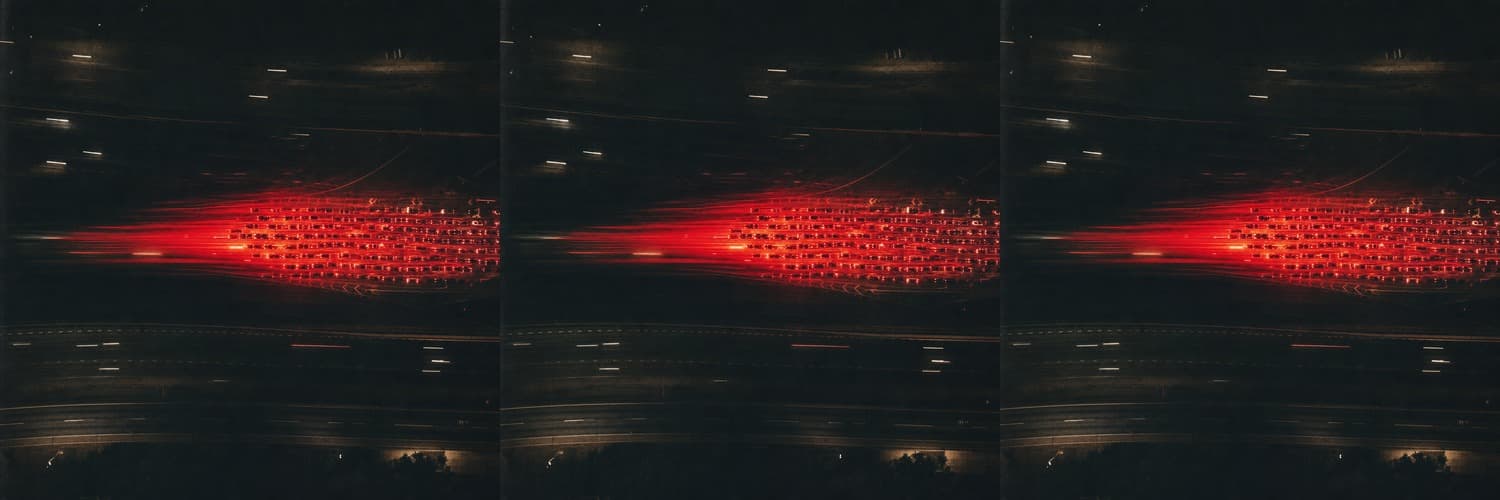
The highway slows, stops, crawls, releases. You scan for the accident — flares, glass, a crumpled fender — and there's nothing. There was never going to be anything. The cause is gone, maybe an hour gone, miles downstream: someone changed lanes too tight, someone braked a little harder than the driver behind could match. The jam detached from that moment and became a thing of its own — a wave rolling backward against traffic at about 20 km/h, which turns out to be roughly the same speed everywhere on Earth. You didn't hit traffic. You drove through the fossil of an event.

In 2008, physicists in Japan put 22 cars on a 230-meter circular track and asked the drivers to hold a steady 30 km/h. Within minutes a jam condensed out of nothing — no bottleneck, no incident, just density plus human reaction time — and crept around the loop against the flow. The paper is called "Traffic jams without bottlenecks."

MIT mathematicians later named these waves jamitons, and showed they obey the same math as detonation waves. A jamiton even has a sonic point, like a black hole's event horizon: inside the jam, information about the free-flowing road ahead cannot reach you. You are formally, provably cut off from the good news.

Here's what I keep turning over: no car stays in the jam. Each one enters at the back, suffers, exits at the front. Total turnover of substance, perfect persistence of form. The jam isn't made of cars any more than a wave is made of water. It's made of delay — and you, briefly, were its medium.