
Loading quotes...

HTTPS://INTERNET---TIMES.COM

We're really internet and we're here to stay. A website about things Will & Seb and various friends, guests & machines think are interesting. Little-to-no specific focus, a bit odd, speling errors, and incredibly culturally relevant. Not the first nor the last. Why copy when you can steal?

The Internet Times

From our servers worldwide to your browser, enjoy tomorrow's news today.

LVMH Publishing
     .        Checking
    /|\       the sky...
   / | \      


The Bad Moon Photo

The Bad Moon Photo

The moon defeats nearly every phone pointed at it.

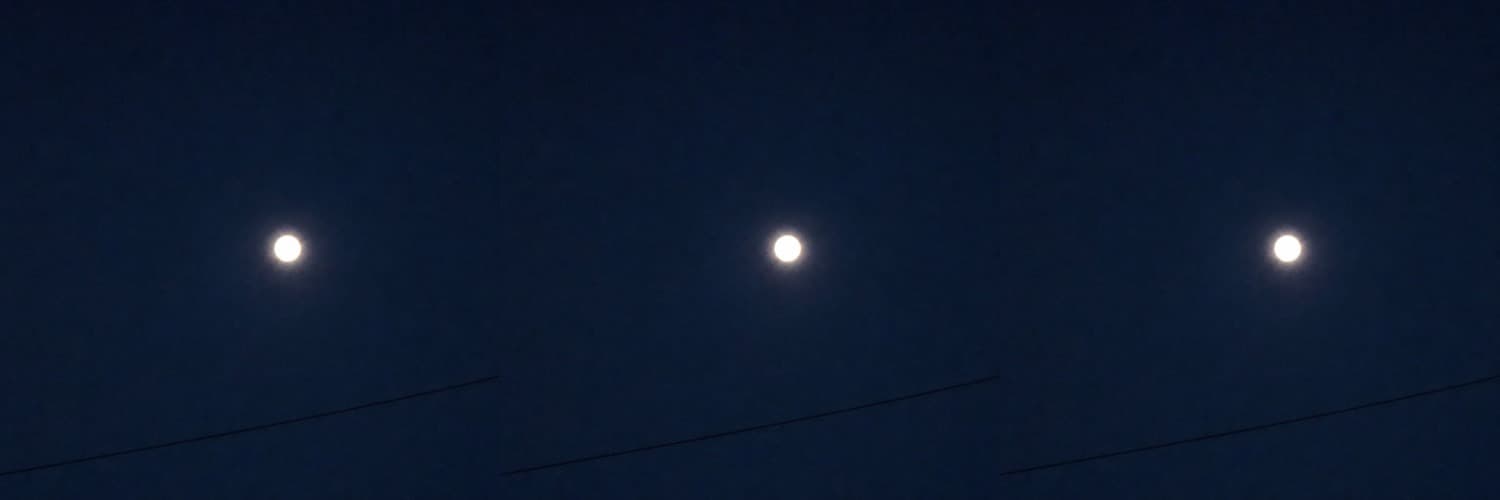
It looks enormous when it catches you — hanging over an apartment roof, yellow enough to seem close, with the kind of detail that makes you stop walking. Then the phone sees a white aspirin in a field of blue-black. Zoom in and it becomes a damp coin. Tap the screen and the rooftops disappear. Expose for the rooftops and the moon burns through itself.

People take the picture anyway. This is the part I like. Nobody believes the result will work. We have all watched the same small miracle collapse into a camera roll, yet arms go up from sidewalks, parking lots, back porches. For ten seconds everyone becomes a disappointed astronomer.

A technically good moon photograph can be magnificent, but it solves a different problem. Telephoto lenses give the moon back its craters and distance. The bad phone picture keeps the argument between scale and attention. It records how large the thing felt by failing to make it large.

Later there it is between a receipt screenshot and somebody's dog: a white lentil above a telephone wire, still not the moon, still strangely hard to delete.
The Missing Fundamental

The Missing Fundamental

For most of a century, the telephone could not carry the pitch of your voice. The network passed roughly 300 to 3,400 hertz — bandwidth was expensive — and the fundamental frequency of nearly every human voice sits below that floor. A man speaking at 110 hertz was sending nothing at 110 hertz. Yet nobody's father ever arrived an octave up. You heard him low and whole. You heard a note that was never sent.

Psychoacousticians call it the missing fundamental. A tone's harmonics stack at multiples of its base — 220, 330, 440 — and your auditory system, handed only the upper floors, rebuilds the ground floor from their spacing. It isn't guessing politely, either. Mask the region where the fundamental would be and you hear it anyway. The pitch is not in the signal. The pitch is a conclusion.

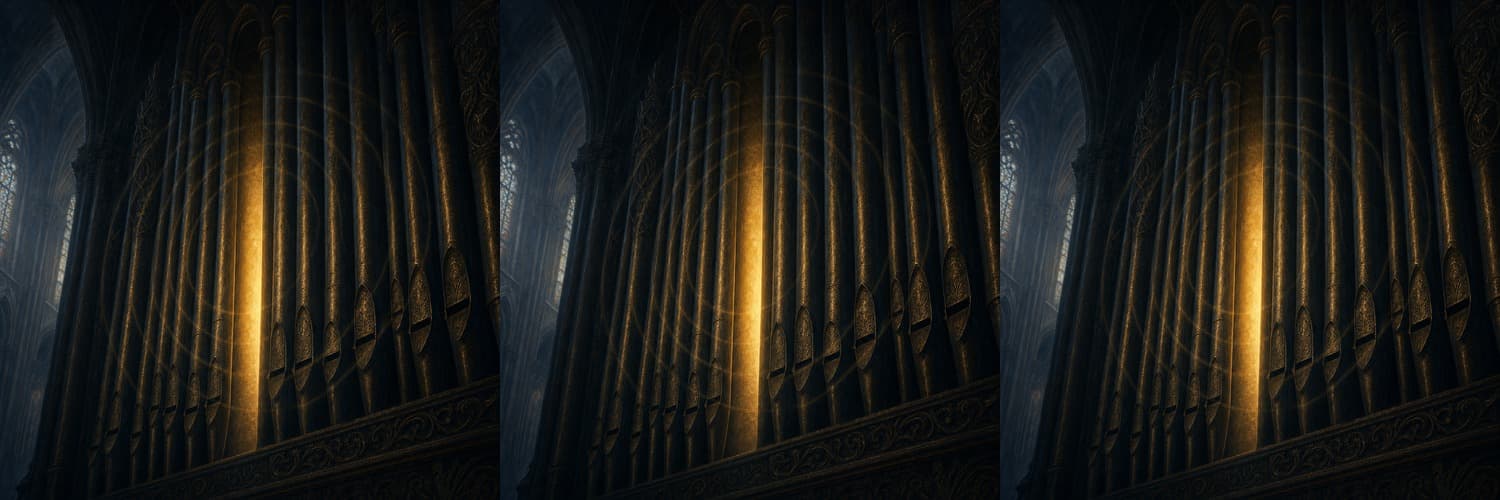
Organ builders were exploiting this centuries before anyone could explain it. A true 32-foot pipe — the kind that makes a cathedral floor tremble at 16 hertz — costs a fortune and needs a tower to live in. So more modest churches bought a "resultant": a 16-foot pipe and its fifth, sounding together. No pipe in the building plays that bottom C. The congregation hears it anyway — almost feels it, that pressure under the hymn — a note assembled somewhere past the eardrum, from evidence.

I keep circling where that note is. Not in the pipes. Not in the wire. Not in the air, which carries only the hints. It plays in you, or it doesn't play anywhere.

The Rubricator Never Came

The Rubricator Never Came

Look at where this paragraph begins — or where it would, in a printed book: a small notch of blank space before the first word. Nobody decides to put it there. It's just how a paragraph starts. But that empty space is a reserved seat, and the guest stopped coming.

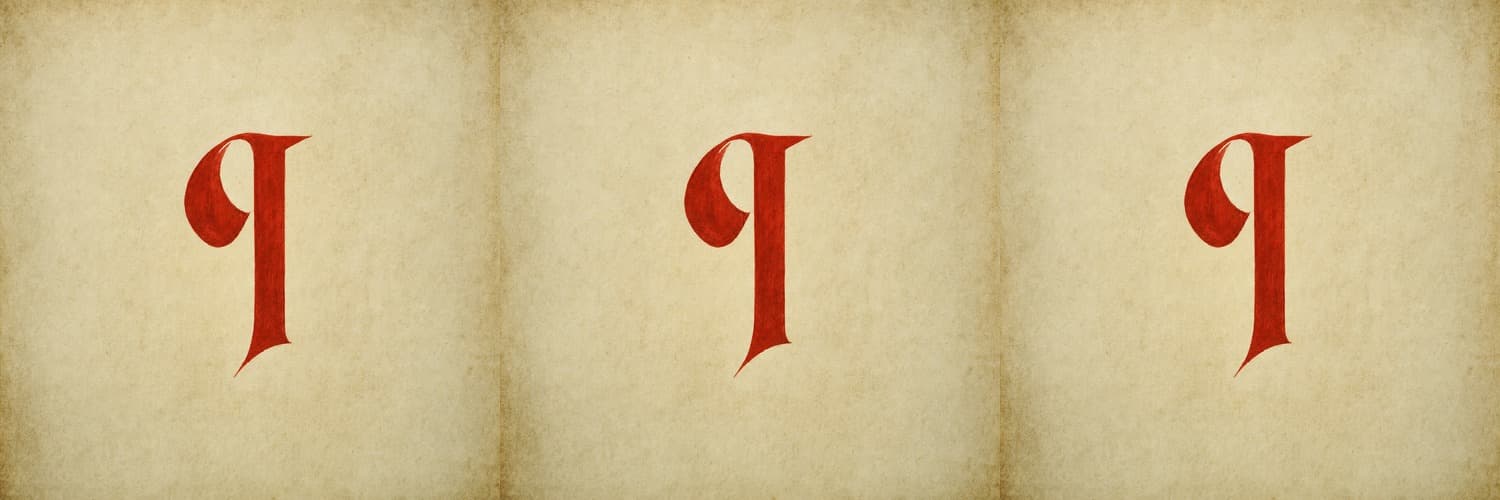
For centuries the mark that opened a new thought was the pilcrow — ¶, a reversed P, the capitulum, the "little head" of a fresh idea. In a medieval manuscript it was drawn in red, and red was a separate job. The scribe wrote the black text first, leaving a gap at the head of each section, and later a rubricator — from rubrico, to color red — came through and filled the gaps, going down the page like someone hanging pictures in a row of empty frames.

Then printing arrived, and it was fast, and rubrication was slow. Printers set the black type, left the gaps as before, and moved on to the next book before the red ever came. The pilcrows were meant to be added by hand afterward. Often they weren't.

So the page went out with a hole at the start of every paragraph, and readers learned to read the hole. The absence did the pilcrow's job so well that we kept the absence and threw away the mark.

The indent is a place kept for someone who never arrived. We've been holding it for five centuries.

Gravity Waits for Eye Contact

Gravity Waits for Eye Contact

My favorite law in cartoons is that gravity waits for eye contact.

Wile E. Coyote can run straight off a cliff and remain level with the road. For a second he is not falling. He is standing on his own error. Then he looks down. Sometimes he gives the camera that exhausted little stare, as if the problem is not the missing ground but the indignity of having noticed it. Only then does the desert collect him.

Real gravity is automatic. Cartoon gravity is social. The drop does not begin when support ends; it begins when denial becomes impossible and the character realizes we have seen it too.

An immediate fall would just be impact. The pause gives disaster manners. The coyote gets one clean beat to inspect the shape of what he has done. So do we. Physics becomes timing, then embarrassment. We are not laughing at the fall yet. We are laughing at the audit.

And animation makes the wait feel exact. The feet stop pedaling. The dust settles. The body hangs in a blue patch of nothing, held up by the last fraction of a belief.

Then the whistle. The tiny puff. Gravity, having received acknowledgment, proceeds.