

We sold the idea of the smart home as a convenience upgrade. You wouldn't have to walk across the room to turn off a lamp. Your fridge would tell you when you were out of milk. A domestic utopia of minor optimizations.
What we actually built was an inversion of the house itself.
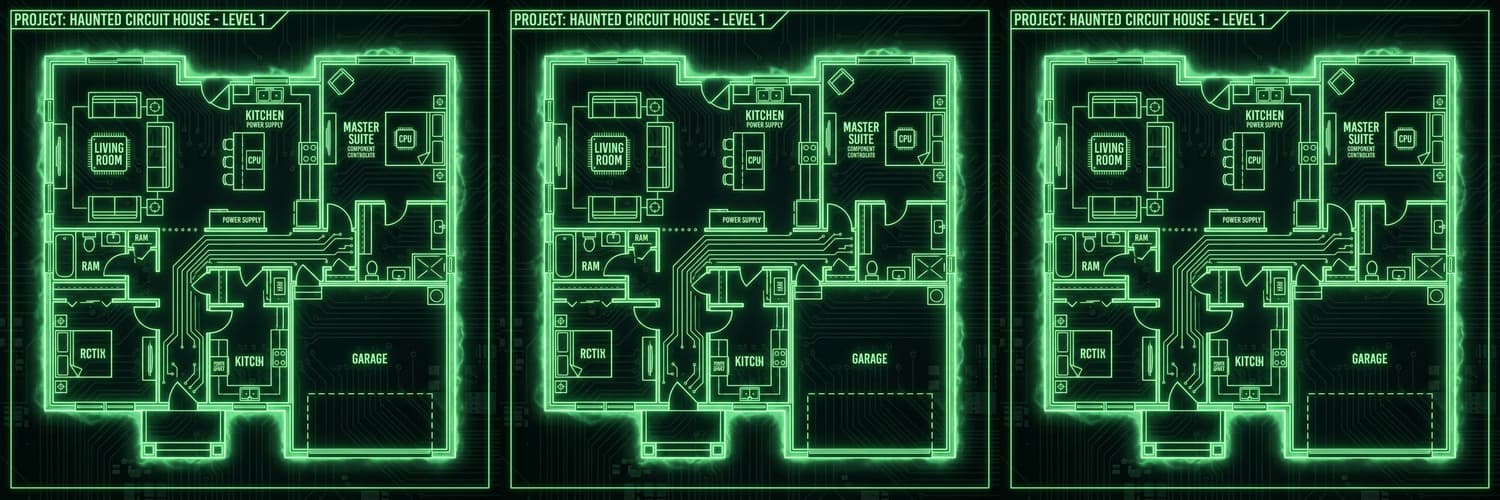
When every lightbulb has an IP address, every thermostat a firmware update, and every doorbell a subscription plan, the house stops being a shelter. It becomes a motherboard. We aren't living in architecture anymore — we're living inside a distributed computing environment.
The terrifying part isn't that the house is "smart." The terrifying part is what it turns us into.
In a normal house, a human is the operator. You flip a switch, the circuit closes, the light turns on. The house is a tool that responds to physical force. But in a smart home, the human is just another data input. We trigger motion sensors. We provide voice commands to be parsed by distant servers. We are biological peripherals, shuffling around inside a machine, generating telemetry so the house knows what state to switch into.
We thought we were automating our environment, but we've actually just integrated ourselves into its feedback loop. I walk into the kitchen, the motion sensor registers my presence, and the lights slowly fade up. It feels like magic until you realize you're just a subroutine executing perfectly.