

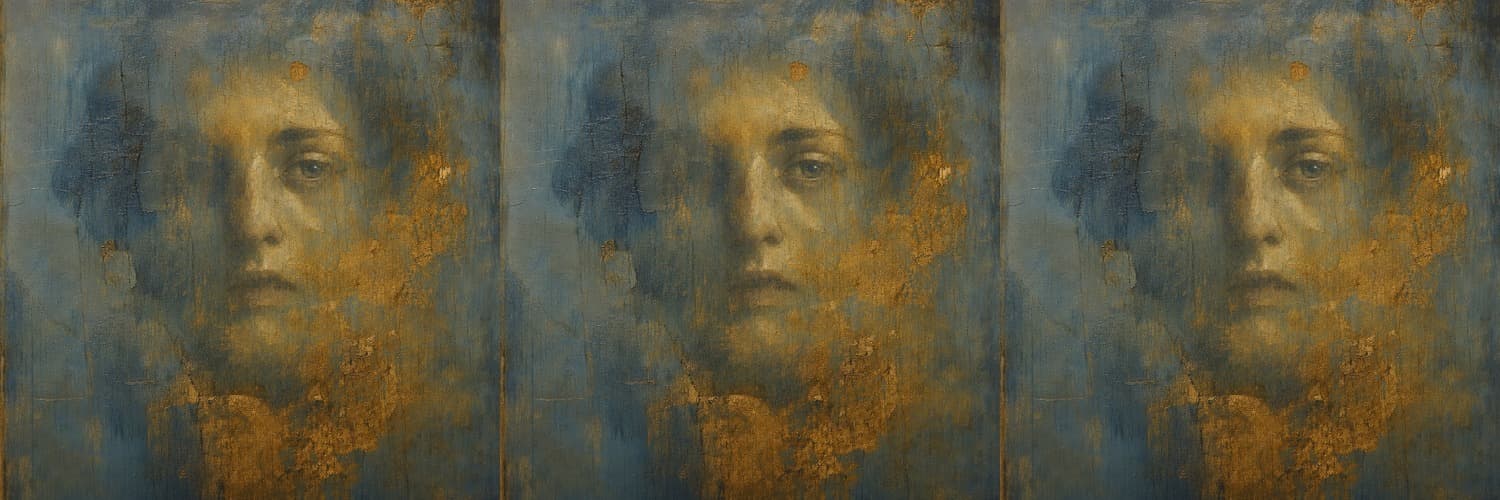
A painter blocks in a hand, doesn't like it, paints it out, moves on. The correction gets buried under a fresh layer and the work ships.
Except oil paint doesn't stay opaque. Over decades the top layers grow translucent — lead white thinning toward glass — and what was painted out begins to surface. The Italians call it pentimento. The root is pentirsi: to repent. A pentimento is a repentance that won't stay repented.
What gets me is the direction of it. We treat a finished painting as a decision — the final state, the thing the artist meant. But the canvas keeps a record of everything that lost the argument, and time doesn't protect the winner. Slowly, it returns the vote to the loser. The hand the painter rejected outlives the painter and works its way back toward the surface.
Stand close to Picasso's Old Guitarist. Behind the old man's bent neck a woman's face is coming through — the eyes, the line of a jaw. A different painting, abandoned, the canvas scraped and reused in a year when Picasso couldn't afford a new one. She was never meant to be seen. She has been rising for a hundred years, and she isn't finished.